Rembrandt van Rijn never photographed anyone. He died three hundred and fifty-seven years before the first camera. And yet every portrait photographer working today is, in some sense, his student.
Photo by Yasu Miyashita 1483715 on Pexels
Rembrandt van Rijn never photographed anyone. He died three hundred and fifty-seven years before the first camera. And yet every portrait photographer working today is, in some sense, his student.
The technique is called chiaroscuro — from the Italian for light-dark — and Rembrandt did not invent it. Caravaggio got there first, and before him Leonardo, and before Leonardo there were the Flemish painters learning to render candlelight against shadow in small domestic interiors. But Rembrandt did something none of them quite managed: he made shadow psychological.
He understood that what you hide is more important than what you show.
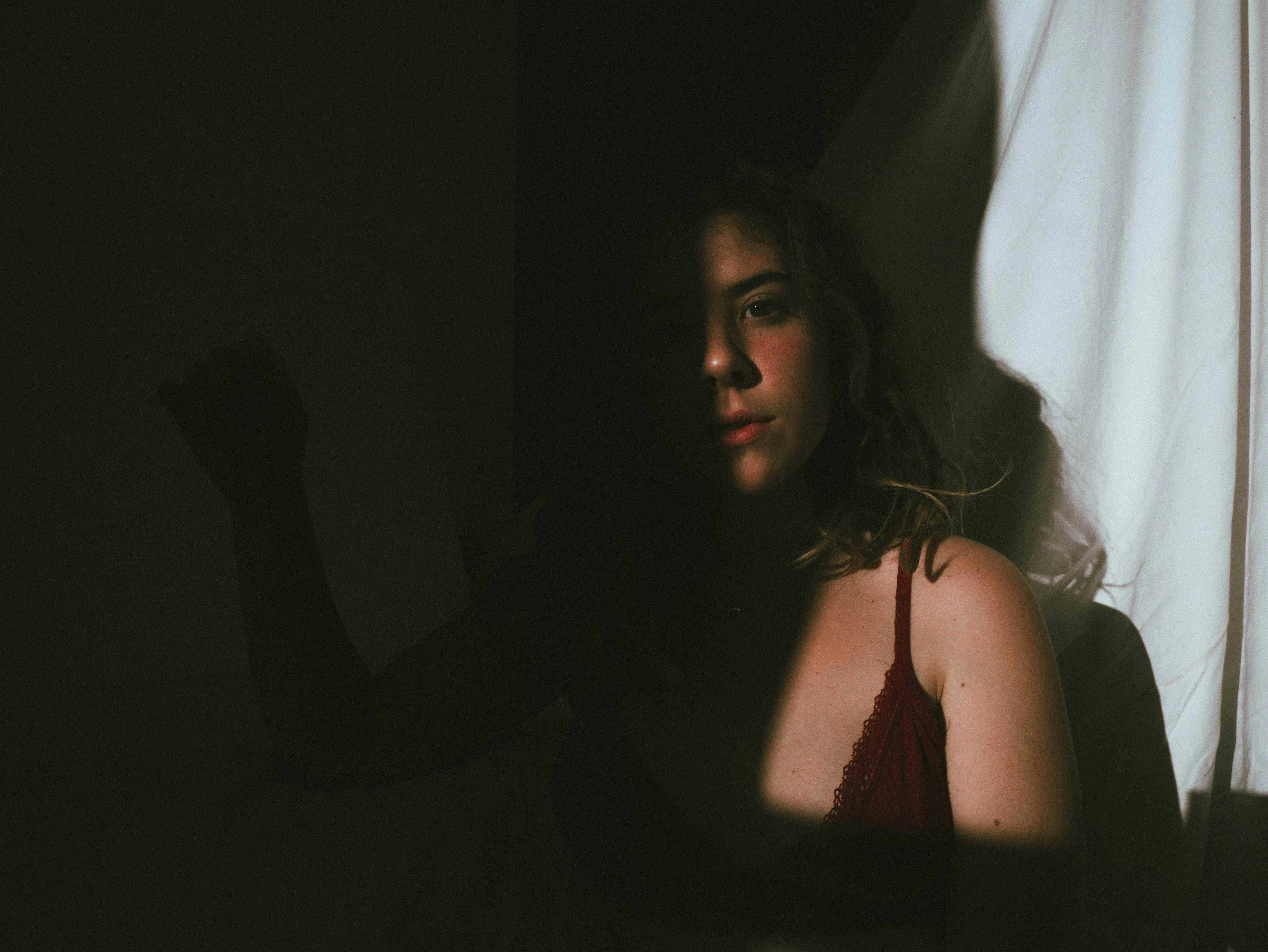
In a Rembrandt portrait, the face is never fully lit. One side catches the light — a cheekbone, the bridge of the nose, the corner of a brow — and the rest falls away. The shadow is not absence. It is information of a different kind. It is the part of the person that remains their own.
This is what photographers call Rembrandt lighting, and it remains the most copied technique in portrait photography four centuries after his death. The setup is mechanical: a single light source positioned forty-five degrees to the side and slightly above, creating a small triangle of light on the shadowed cheek. Any competent photographer can reproduce it in twenty minutes.
What cannot be taught is why it works.
What you hide is more important than what you show.
It works because the face we show the world is not the face we are. Every portrait is a negotiation between the presented self — composed, aware of being seen — and whatever lies behind it. Full, flat lighting collapses this negotiation. It shows everything and thereby shows nothing. The face is a surface.
Shadow restores the negotiation. The lit side of the face is the face that has agreed to be seen. The shadowed side is the face that has not. And in that contrast — between the given and the withheld — something recognizable as a person emerges.
Rembrandt painted this distinction obsessively. His late self-portraits are among the most searching images in Western art not because they are technically accomplished — they are, but so are many things — but because they refuse to settle. The face is always partially in shadow. There is always something he is not showing you.
The works in the Strong Contrast sequence share this inheritance. Not all of them are portraits, and none of them are Dutch, and most of them were made with cameras rather than brushes. But the logic is the same: light that is not distributed evenly, that chooses what to reveal and what to keep, that understands shadow as a form of meaning rather than a failure of illumination.
A figure in strong side light becomes two figures — the one who faces you and the one who faces away. The tension between them is what holds your attention. You look longer at an image that withholds something. You stay with it, trying to see what the shadow knows.
This is what Rembrandt understood. Not that light is beautiful — it is — but that shadow is specific. That what falls into darkness tells you as much as what comes into light. That the self, faithfully rendered, is always partly hidden.
There is a version of this lesson available to anyone who looks at these images with some patience. You begin to notice what is not there. The edge of a shoulder disappearing into darkness. A hand suggested rather than shown. The space where a face would be, occupied instead by the idea of a face.
This is not obscurity for its own sake. It is a technique for producing presence. The shadow makes the light more specific, more earned. What emerges from darkness matters more than what was always in the light.
Rembrandt knew this. His students know it. And four centuries later, in a camera lens, in the aperture settings of a photographer who may never have stood in front of a Dutch Golden Age painting, the same knowledge persists. Light and shadow. The given and the withheld. The face that has agreed to be seen, and the face that has not.