Warhol · Method 1 of 12
Silkscreen Serialization
1962 onward (Marilyn Diptych, 1962)
The method
The serial image does not devalue the face. It intensifies it. The same Marilyn, forty-nine times, is not one Marilyn multiplied — it is forty-nine attempts to arrive at Marilyn, each one failing in a slightly different way. Warhol understood something about the relationship between attention and repetition that the gallery world of 1962 mistook for cynicism. When you look at an image once, you see the subject. When you look at it forty-nine times, you see what looking at it is. The silkscreen holds the viewer inside the second kind of seeing. For a platform built on sustained attention to the body, this is the inheritance: repetition as a practice of looking. The serialized portrait refuses the cinematic glance and asks for the contemplative one.
Process
Photo-emulsion silkscreen on primed canvas. A source photograph — usually a publicity still, mugshot, or news image — is enlarged onto a mesh screen, then hand-pulled with ink over a hand-painted color field. Same image, again and again, with registration drift and color variance producing difference within repetition.
Canonical works
- Marilyn Diptych (1962)
- Campbell's Soup Cans (32 canvases, 1962)
- Elvis I and II (1963)
- Self-Portrait (1966)
- Mao (1972)
The Vela take
The Vela take: serial attention is the contemplative form for an image culture. Warhol's method, stripped of its specific subjects, is the method figurative work has to have when the classical frame has dissolved.
Context
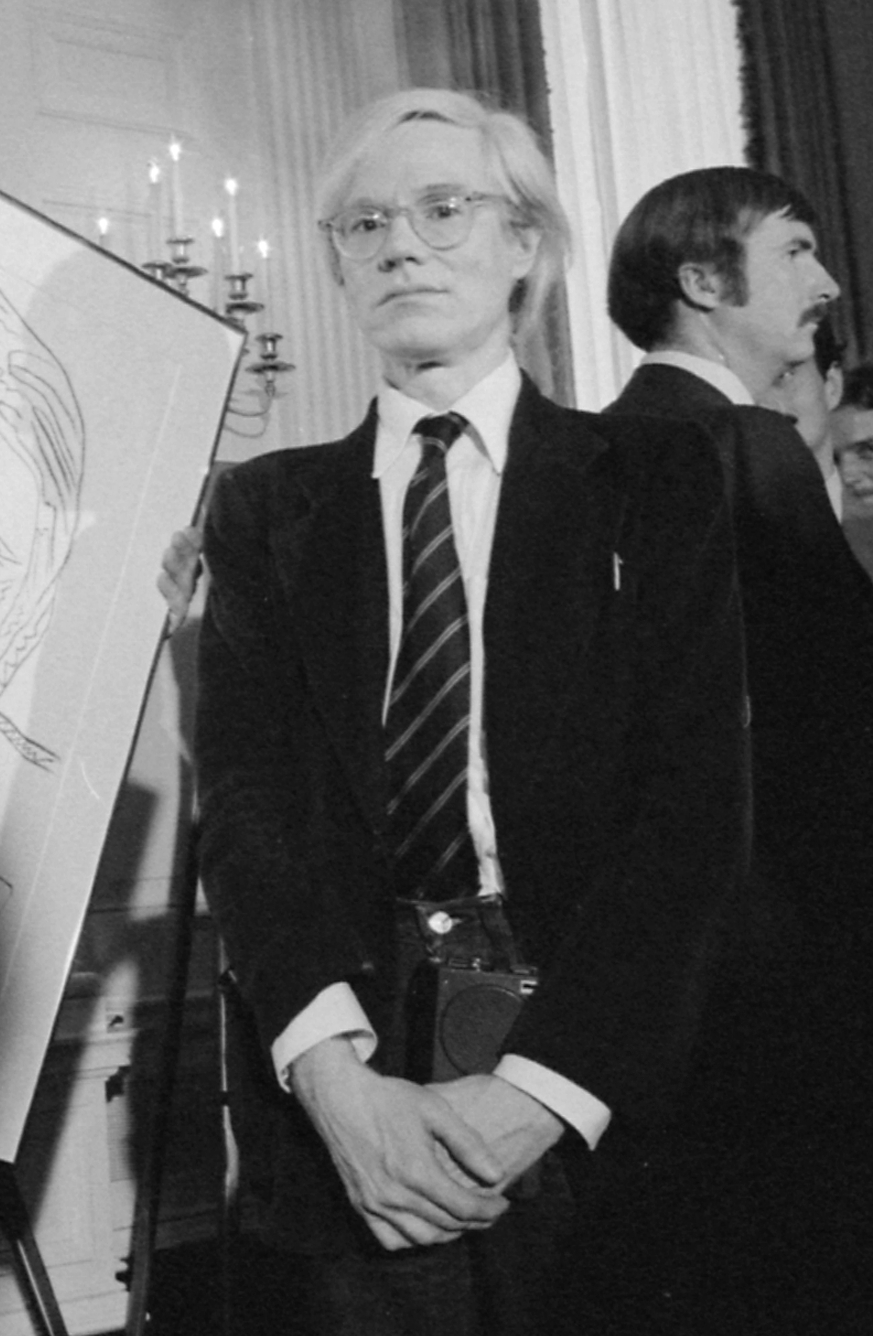
Public domain · Wikimedia Commons
Our reinterpretations
No reinterpretations are live in the library yet for this method. The pipeline is registered in lib/derivatives/treatments/warhol-silkscreen-serialization.ts; curator-promoted units will appear here as they ship.