Warhol · Method 3 of 12
Polaroid Intimacy (Big Shot)
1971–1979 (Polaroid Big Shot era); continues through 1987
The method
The Polaroid is what Warhol did before the silkscreen. It is also, quietly, the more intimate object. The Big Shot's fixed distance flattens the face; the on-camera flash erases shadow. What you see in a Warhol Polaroid is not a face as the sitter experiences it but a face cornered by the apparatus. Some sitters collapse in front of it. Some ignite. The Polaroids catalogue that difference with a precision the silkscreens can only approximate, because the silkscreen has already chosen what to emphasize. The Polaroid is still deciding. For a platform interested in what the body looks like when the person inside it meets the instrument that will represent them, this is the richest vein in Warhol's practice — and the most tractable, because the method is pre-photographic in the compositional sense. Anyone can stand someone at 42 inches and press the button. The discipline is what happens next.
Process
A single-focal-length Polaroid Big Shot at a fixed distance (about 42 inches) produces flat, frontal, fluorescently-lit portraits — the sitter pushed against a wall, sometimes made up, sometimes not. These served as source material for commissioned silkscreen portraits, but the Polaroids themselves are now understood as a body of work in their own right.
Canonical works
- Mick Jagger Polaroids (1975)
- Ladies and Gentlemen Polaroids (1975)
- Warhol's Polaroid portraits of collectors, socialites, drag performers (1970s–80s)
The Vela take
The Vela take: the Big Shot's fixed distance is a contemplative instrument the silkscreen can only approximate. The Polaroid is still deciding; that indecision is the work.
Context
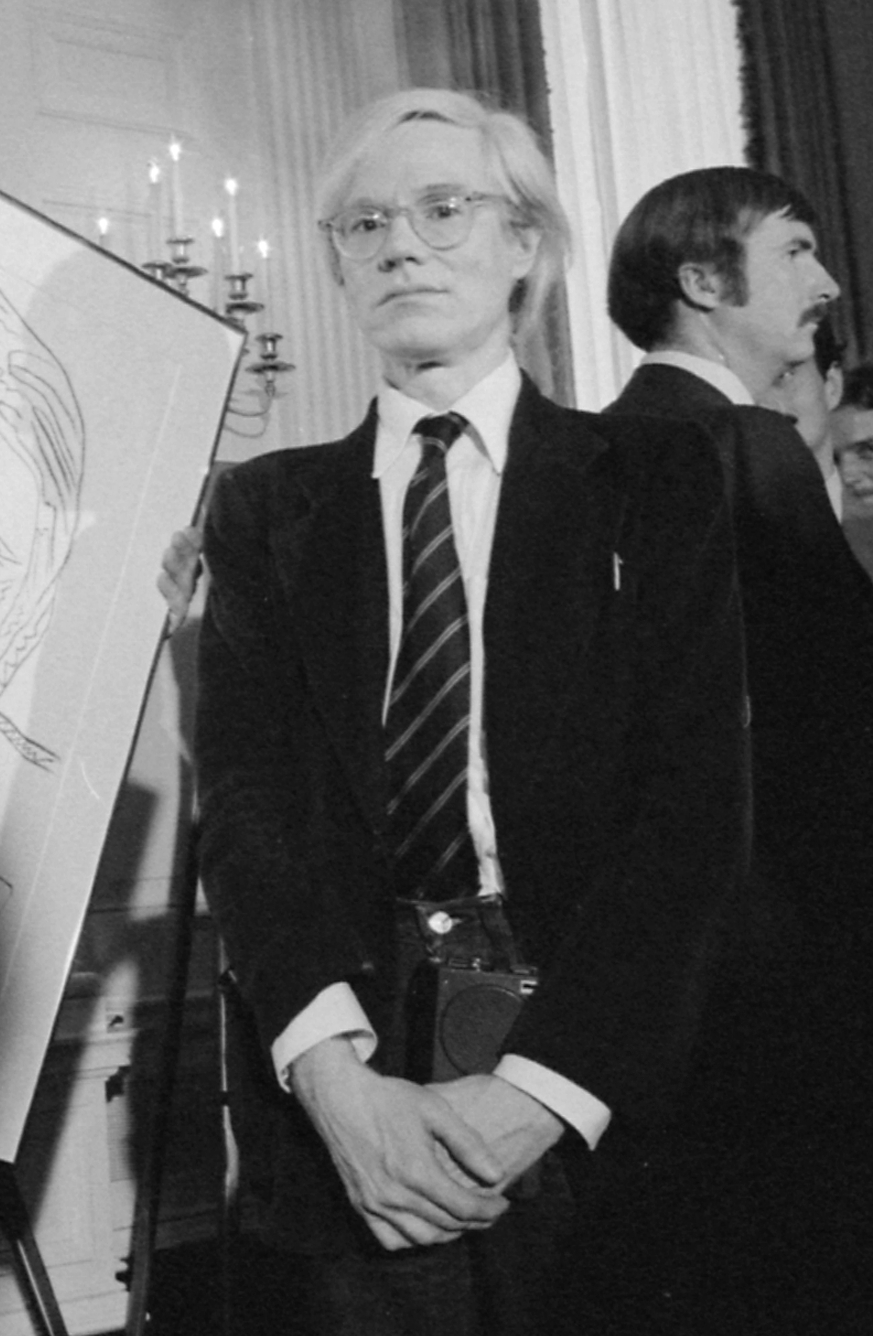
Public domain · Wikimedia Commons
Our reinterpretations
No reinterpretations are live in the library yet for this method. The pipeline is registered in lib/derivatives/treatments/warhol-polaroid-intimacy.ts; curator-promoted units will appear here as they ship.