Warhol · Method 6 of 12
Oxidation ("Piss") Paintings
1977–1978
The method
The Oxidations are the paintings Warhol made when he had run out of things he was willing to say with an image. They are abstractions in the literal sense — no source photograph, no celebrity, no commodity — but they are not gestural in the Abstract Expressionist sense either. The hand that made them is not the artist's. It is the body's, at the level the body cannot perform. What you see on the canvas is a chemical record of something that actually happened: someone stood in a studio, did something mammalian and slightly transgressive, and the copper caught it. The paintings are beautiful in a way that is difficult to place, because the beauty is not aesthetic in origin. It is a byproduct. For a platform interested in the body as instrument, the Oxidations are a warning and a permission at the same time: the body can make an image without the mind being in charge of it. This is usually true of pleasure as well.
Process
Copper-pigment ground painted on canvas. Assistants — sometimes Warhol himself — urinate on the wet ground. Uric acid oxidizes the copper, producing metallic greens, blacks, and golds in patterns determined by stream and gravity. The canvas is then cured.
Canonical works
- Oxidation Painting (1978)
- Oxidation Painting in 12 Parts (1978)
The Vela take
The Vela take: a warning and a permission. The body can make an image without the mind being in charge of it. Not a method we reinterpret — its frame is not our frame — but a reference point for what it means to trust the body over the idea.
Context
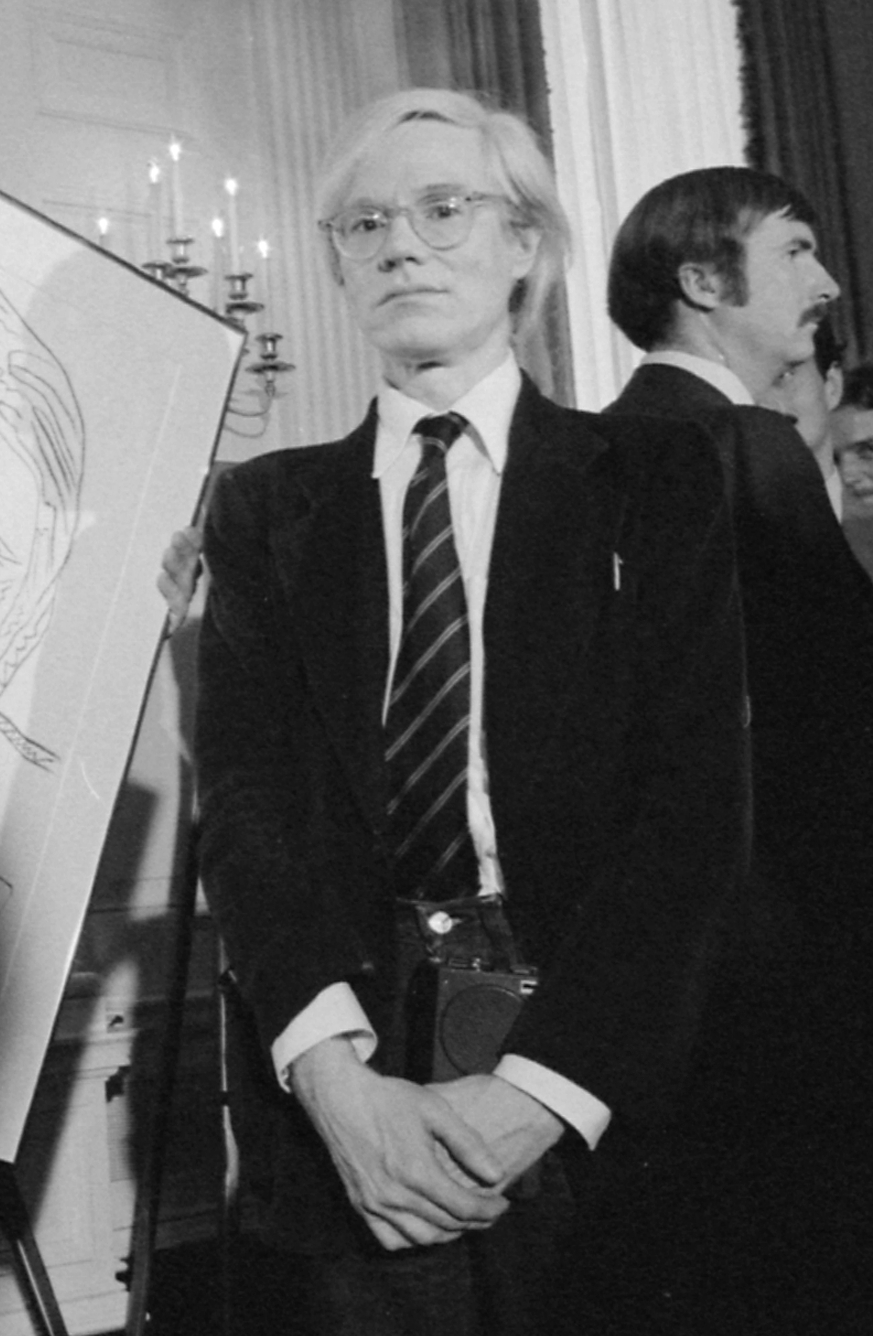
Public domain · Wikimedia Commons
Our reinterpretations
No reinterpretations are live in the library yet for this method. The pipeline is registered in lib/derivatives/treatments/warhol-oxidation.ts; curator-promoted units will appear here as they ship.