Warhol · Method 2 of 12
Color-Block Portraiture
1963 onward (Liz, Jackie, Mao, late Marilyn portfolios)
The method
Color-block portraiture is the moment Warhol stopped photographing a face and started staging one. The flat pink, the arbitrary green eyeshadow, the lipstick that doesn't match the mouth — these are not mistakes of registration. They are a claim about what a face is. A face is not a collection of features. It is an arrangement of attention that the viewer brings to it, and the colors are Warhol's way of naming which parts of the arrangement are loud and which are quiet. For figurative work that takes the body seriously, the method is more usable than it first appears. Strip the photo-source and the celebrity and you still have a vocabulary: saturated flats against observed line, color decisions that amount to editorial decisions about where the viewer is allowed to rest.
Process
A portrait photograph is reduced to silkscreen over flat planes of hand-painted, saturated color. Lips become a single red shape; hair becomes one gestural sweep of yellow; eye shadow becomes a block of turquoise sitting on the face like enamel. The photograph provides the armature; the color provides the emotional temperature.
Canonical works
- Liz Taylor portraits (1963)
- Jackie (1964 — Eight Jackies)
- Mao (1972)
- Self-Portrait (1986)
- Late Marilyn portfolios (1967)
The Vela take
The Vela take: color is an editorial decision about where the viewer is allowed to rest. This is the method to study when the question is how a figure earns a face, not just a body.
Context
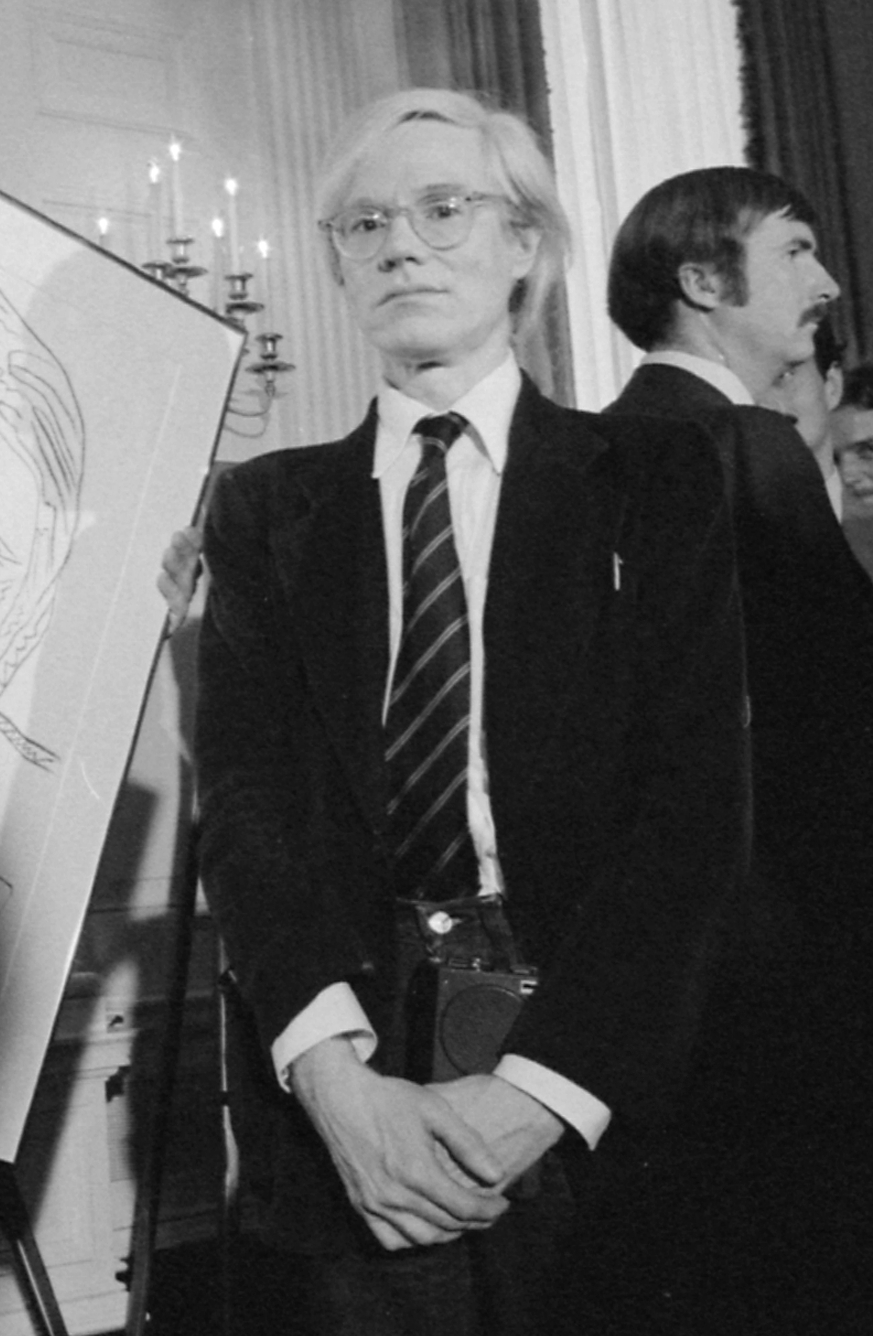
Public domain · Wikimedia Commons
Our reinterpretations
No reinterpretations are live in the library yet for this method. The pipeline is registered in lib/derivatives/treatments/warhol-color-block-portraiture.ts; curator-promoted units will appear here as they ship.