Warhol · Method 10 of 12
Camouflage
1986
The method
The Camouflage paintings are the work of the last year of Warhol's life and they know it. The pattern that is supposed to hide a body is stretched across a canvas, scaled up past any functional use, and then — in the self-portrait — dragged across the artist's own face so the face is visible only because the camouflage fails to disappear it. It is a late man's joke about visibility. For thirty years the public image had been the medium; now, here, the public image is drawn over with the pattern whose job is to make a body disappear, and the pattern is the thing you see. The body is implied. A platform about attention to bodies can learn from this inversion: sometimes the most honest portrait is the one where the subject has been partially withdrawn and the withdrawal is what you look at.
Process
Standard military camouflage pattern — enlarged, hand-painted, sometimes in non-military colors (pink, red, purple) — used as surface pattern, occasionally silkscreened over a photograph so the figure beneath is visible only as a disturbance in the field.
Canonical works
- Camouflage Self-Portrait (1986)
- Camouflage Last Supper (1986)
- Camouflage (1986, standalone paintings)
The Vela take
The Vela take: sometimes the most honest portrait is the one where the subject has been partially withdrawn and the withdrawal is what you look at. A late-Warhol inversion Vela can learn from.
Context
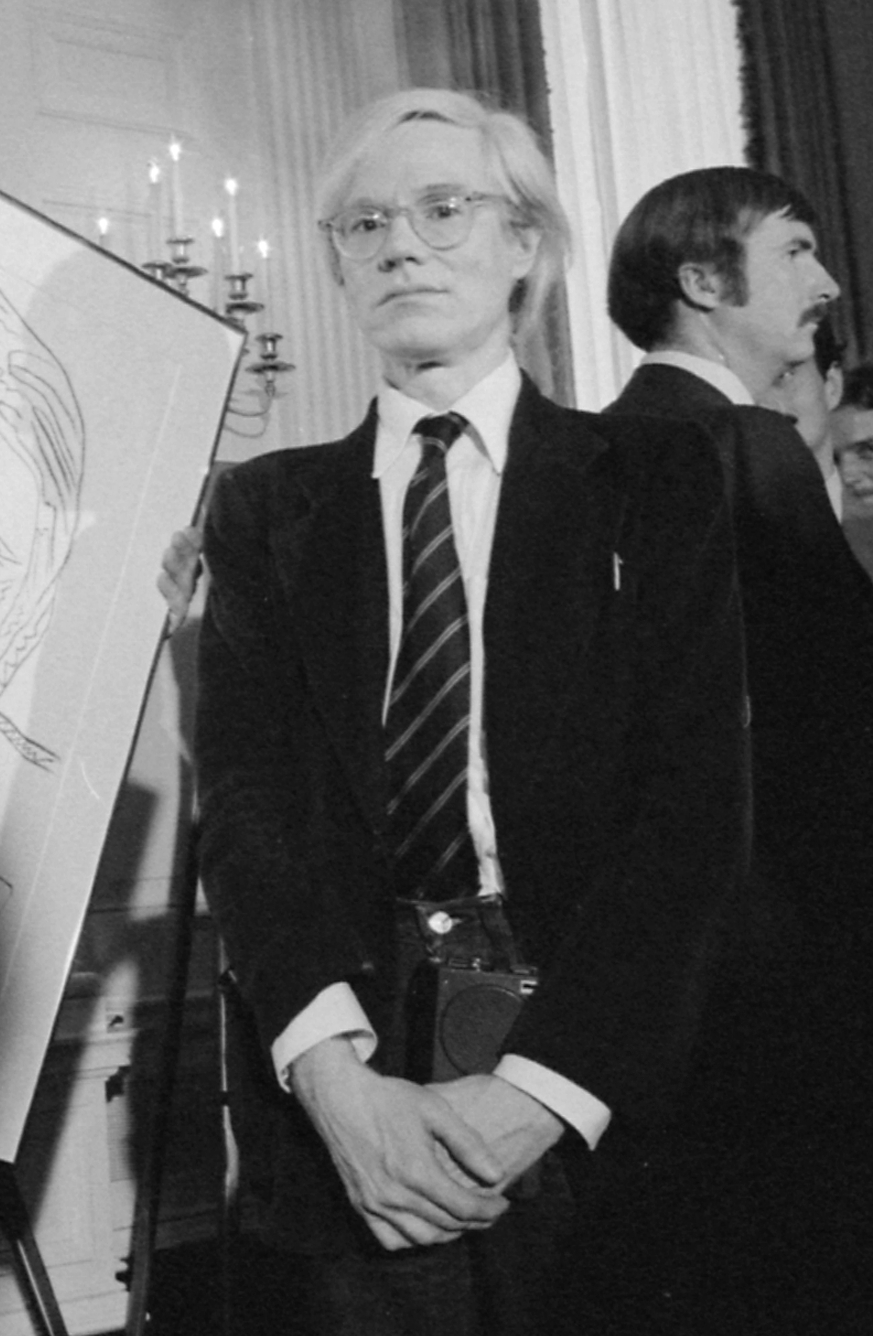
Public domain · Wikimedia Commons
Our reinterpretations
No reinterpretations are live in the library yet for this method. The pipeline is registered in lib/derivatives/treatments/warhol-camouflage.ts; curator-promoted units will appear here as they ship.