John Singer Sargent
American · 1856–1925
Sargent painted his sitters the way his contemporaries painted weather — drapery as moving air, status as held tension, the wealthy as serious people doing serious work. The portraits land because he refused both flattery and exposure. What you see is a body the painter has decided to take seriously.
The Sargent profile sits in Vela's Artist Studies arc — paired against Warhol as the commissioned-devotion register beside the consumed-celebrity register. Sargent worked from sittings, from sustained attention to a single body in a single room over hours and days. The line is patient. The drapery does work. The face is offered with a kind of restraint that contemporary portraiture has largely lost. Read him for the way fabric moves; read him for the way an arm holds its own weight; read him for the way a daughter stands at the edge of being looked at without flinching. The magazine essay on drapery treats this directly. Vela's library holds a working selection of Sargent's portraits, watercolors, and a few of the murals; the Clark Art Institute holds more, and the gallery hub points there for the rest. We are reading him through one editorial axis — the question of what serious portraiture looks like when the painter takes the sitter seriously — not as a comprehensive catalog.
Character
Works in the library
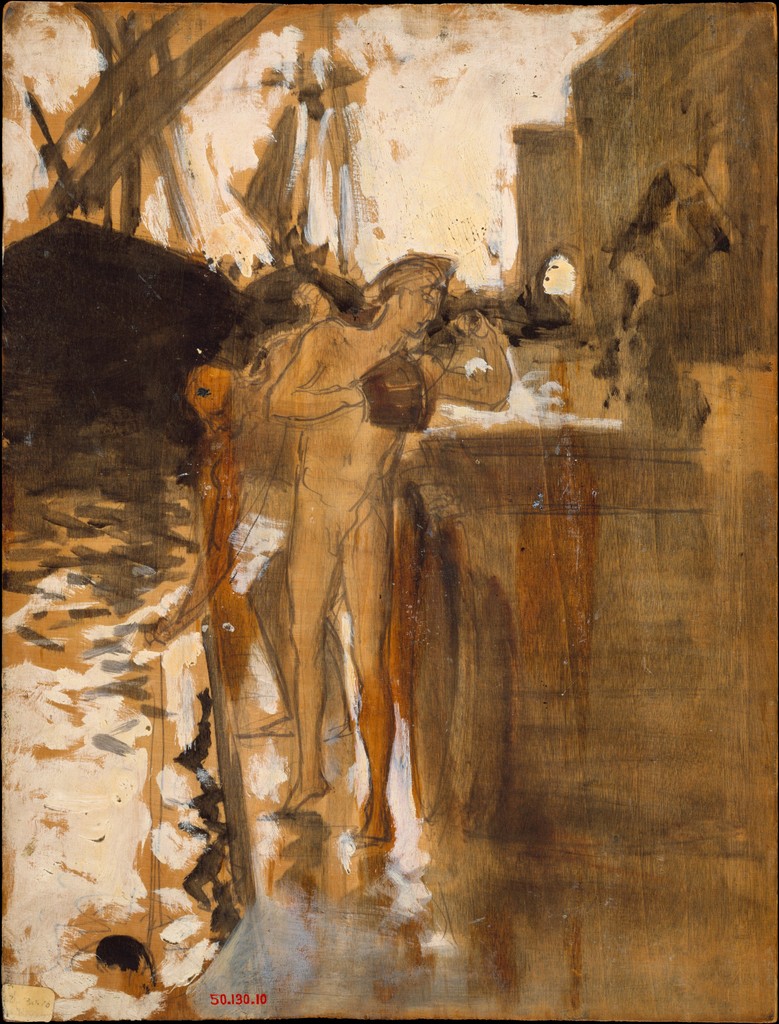
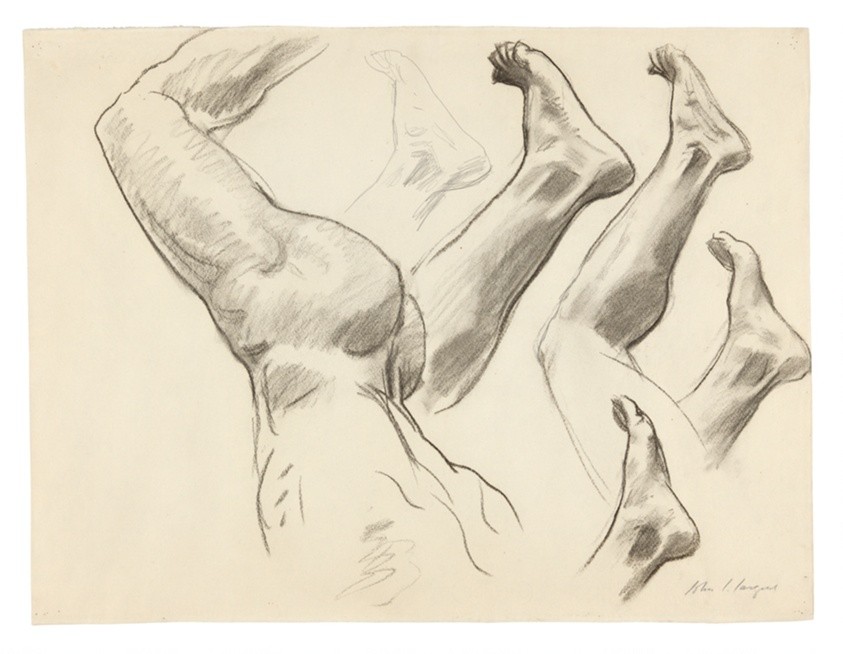
Collected at
In the magazine
Read alongside
- James McNeill Whistler
The American contemporary whose tonal restraint reads against Sargent's bravura — same era, opposite hand.
- Cecilia Beaux
Often called 'the female Sargent' in her own lifetime — read the portraits side-by-side and decide whether the comparison holds or condescends.
- Anders Zorn
The Swedish contemporary whose alla-prima brushwork Sargent studied — kinship in the wet edge.
Through another lens
- AdmirationEmotion
Sargent's portraits invite admiration toward the sitter without flattery — the painter takes the body seriously, and the viewer follows.