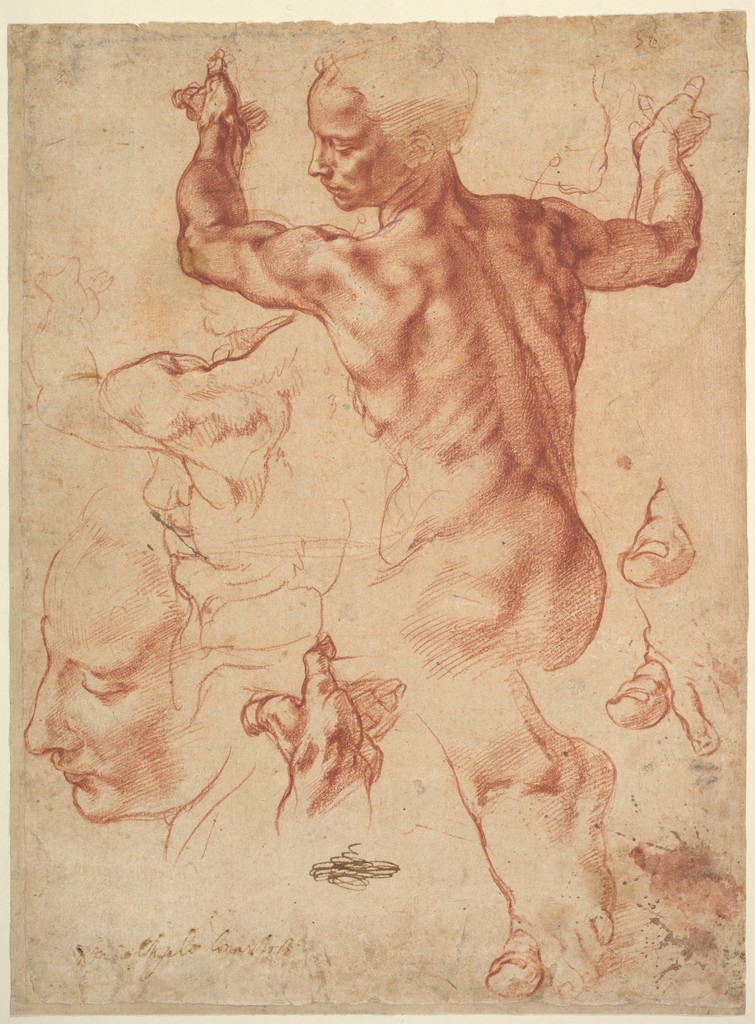
Michelangelo
Italian · 1475–1564
Michelangelo di Lodovico Buonarroti Simoni was born in Caprese, Tuscany, in 1475. He trained in Florence under Ghirlandaio and then in the household of Lorenzo de' Medici. His sculpture — the Pietà, the David, the figures for the Medici Chapel — represents a sustained engagement with the male body as a vehicle for spiritual and emotional meaning. For Michelangelo, the body was not an obstacle to transcendence but its medium. The Sistine Chapel ceiling, painted between 1508 and 1512, remains one of the most ambitious artistic undertakings in history. The Last Judgment, painted on the altar wall between 1536 and 1541, was the largest fresco since antiquity. In the 1560s, Pope Paul IV found the nudes in the Last Judgment indecorous and commissioned Daniele da Volterra to paint drapery over the figures. Michelangelo had died in 1564. Volterra complied, earning the nickname Il Braghettone — the breeches maker. Some added drapery was removed during the 1990s restoration. Some remains. Michelangelo also wrote nearly 300 surviving poems, many addressed to Tommaso de' Cavalieri. His grandnephew changed the male pronouns to female in a posthumous edition. The original texts were restored by scholars in the 19th century. He died in Rome in 1564 at eighty-eight, still working.