Edgar Degas
French · 1834–1917
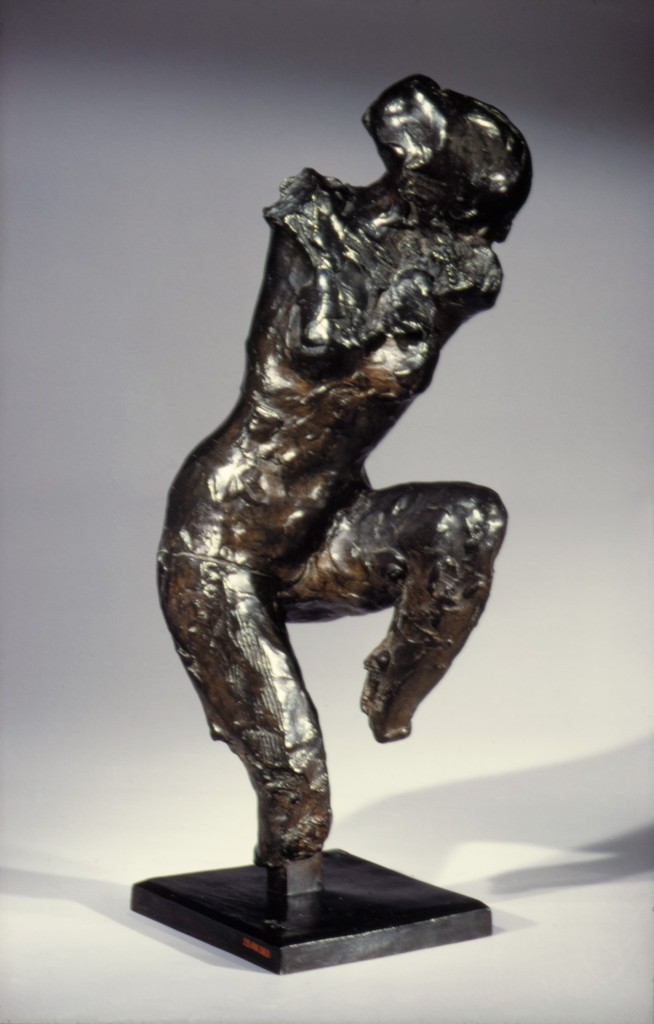
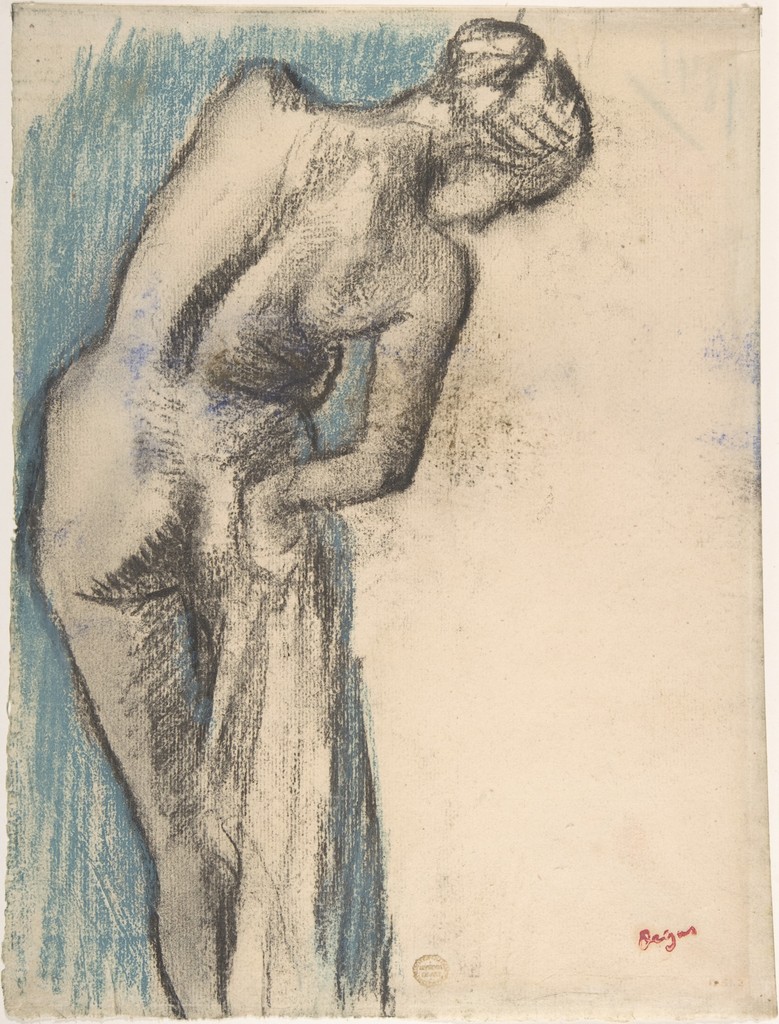
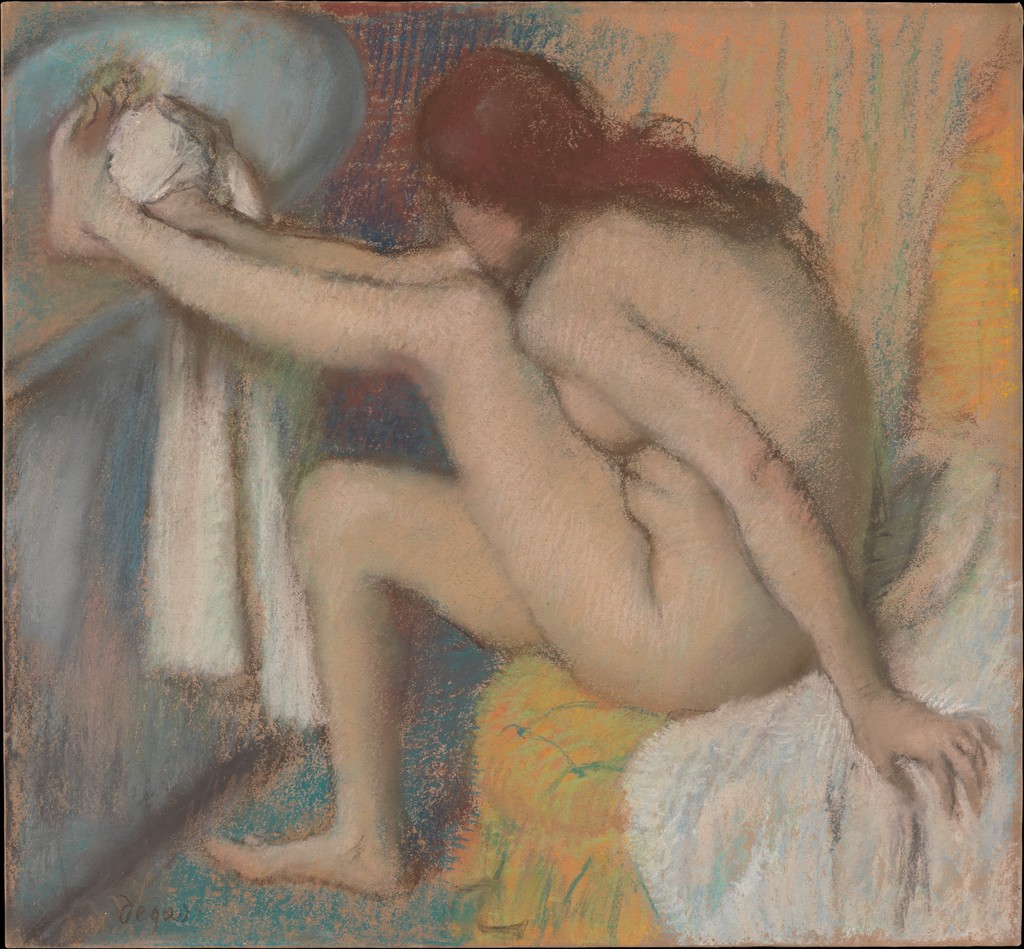
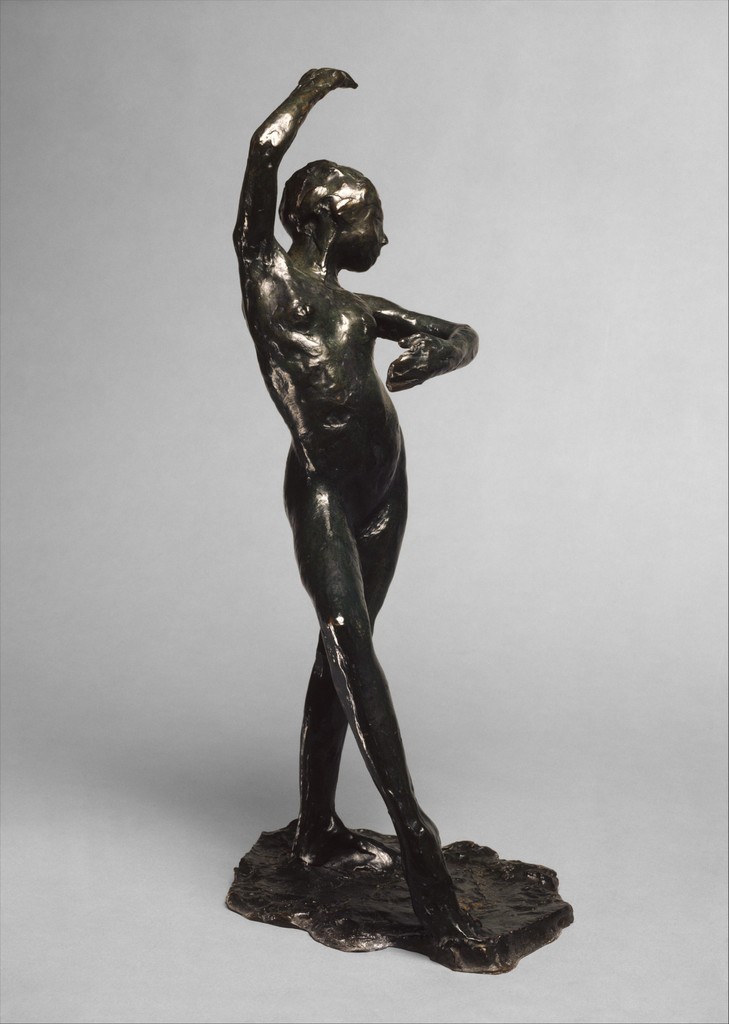
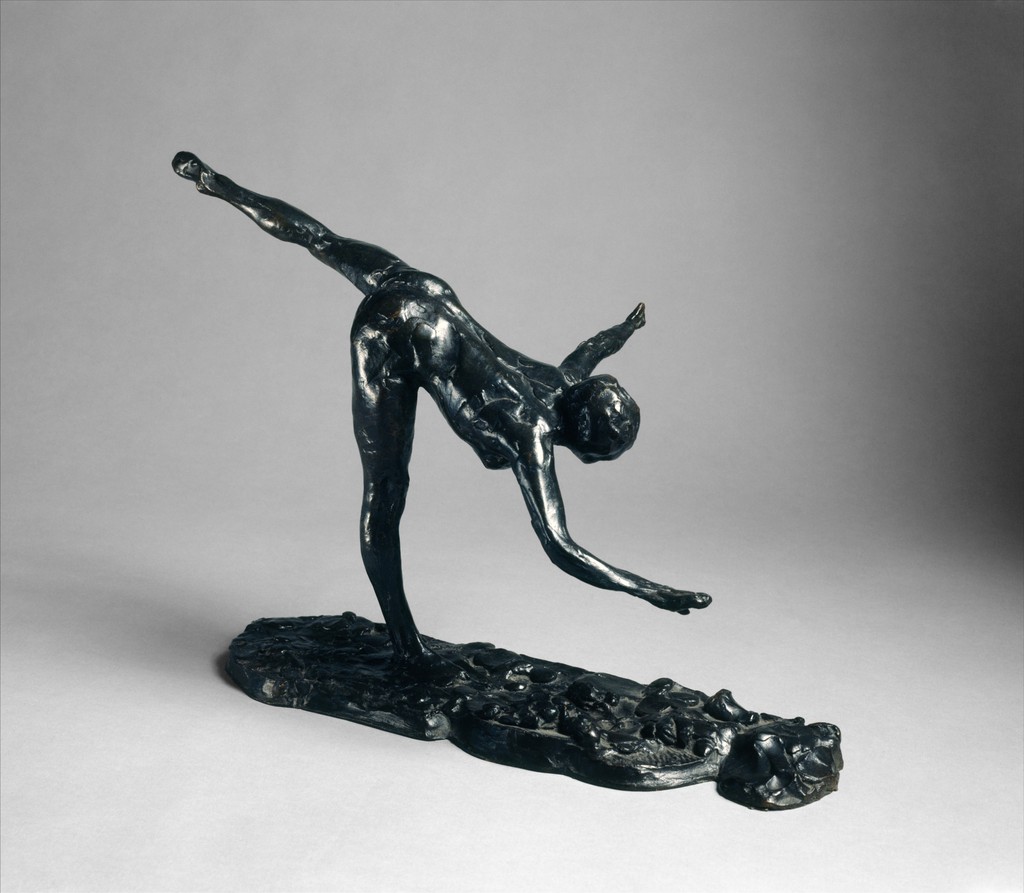
Degas painted people at work. Dancers stretching at the barre, milliners pinning hats, laundresses folding linen, jockeys waiting in the paddock — the bodies caught between the moments their professions are usually photographed in. The work is sympathetic and clinical in the same gesture, and the two are rarely as separable as the viewer would like.
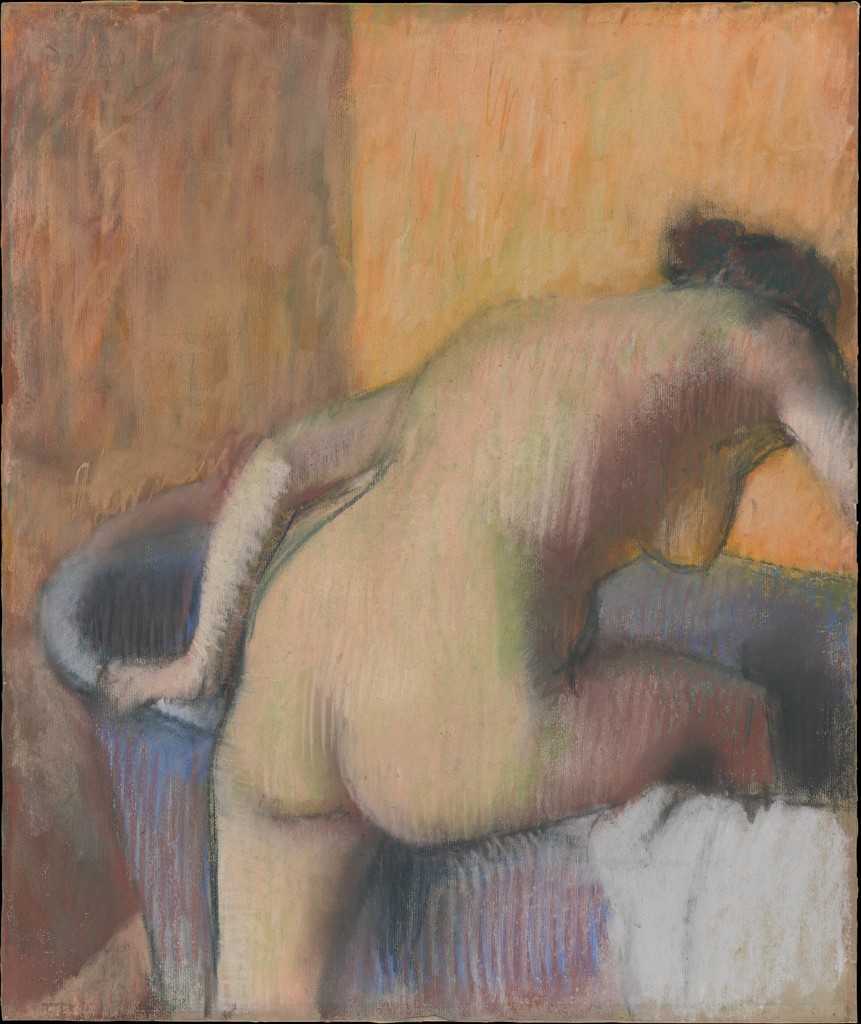
Look at *The Rehearsal* (1873-1878) or *The Dance Class* (1874) and what Degas paints is not the performance — the curtain is down, the stage is empty, the orchestra is absent. The dancers are bored, exhausted, adjusting a shoe ribbon, looking out a window at nothing. The pastel pulls every detail of fatigue from the working body without softening it into pity. Look at *The Tub* (1886) and the same painter renders a woman bathing as a subject of formal interest — the back curving over the water, the arm folded across the knee — with a regard that is undeniably looking and that the bather is undeniably not staging for the looker.
On the axis from consumed observation to commissioned devotion the Artist Studies arc reads through, Degas occupies a difficult middle. The dancers did not commission these pictures; the laundresses did not. He bought subscriptions to the Paris Opéra to access the rehearsal floors and the dressing rooms, and the resulting work is among the most formally serious depictions of working women's bodies in the nineteenth century — and also among the most contested. Read his pictures for the line, which is unmistakable, and for the complication, which is also unmistakable; the two are not separable, and pretending they are flattens both.
Character
Works in the library
Collected at
In the magazine
Read alongside
- Mary Cassatt
Degas's friend, his sometime collaborator, and the painter who chose mothers and children as her central subject partly in answer to questions his pictures raised about how women's bodies get looked at.
- Henri de Toulouse-Lautrec
The next generation of Parisian observer — dancehalls, brothels, late-night cafés. Lautrec inherits Degas's eye for the worked-body and adds an affection Degas tended to withhold.
- Berthe Morisot
Degas's Impressionist contemporary, exhibited alongside him in seven of the eight group shows; her domestic scenes read against his backstage scenes as two answers to the same question about what counts as a serious subject.
Through another lens
- Exposure-dreadEmotion
The unease the bather and dancer pictures generate in the viewer is partly the viewer's own — the recognition of being placed in the position of looking at a body that did not consent to the position the painter put it in.